News Articles

News Articles

30th Annual YMCA Golf Classic

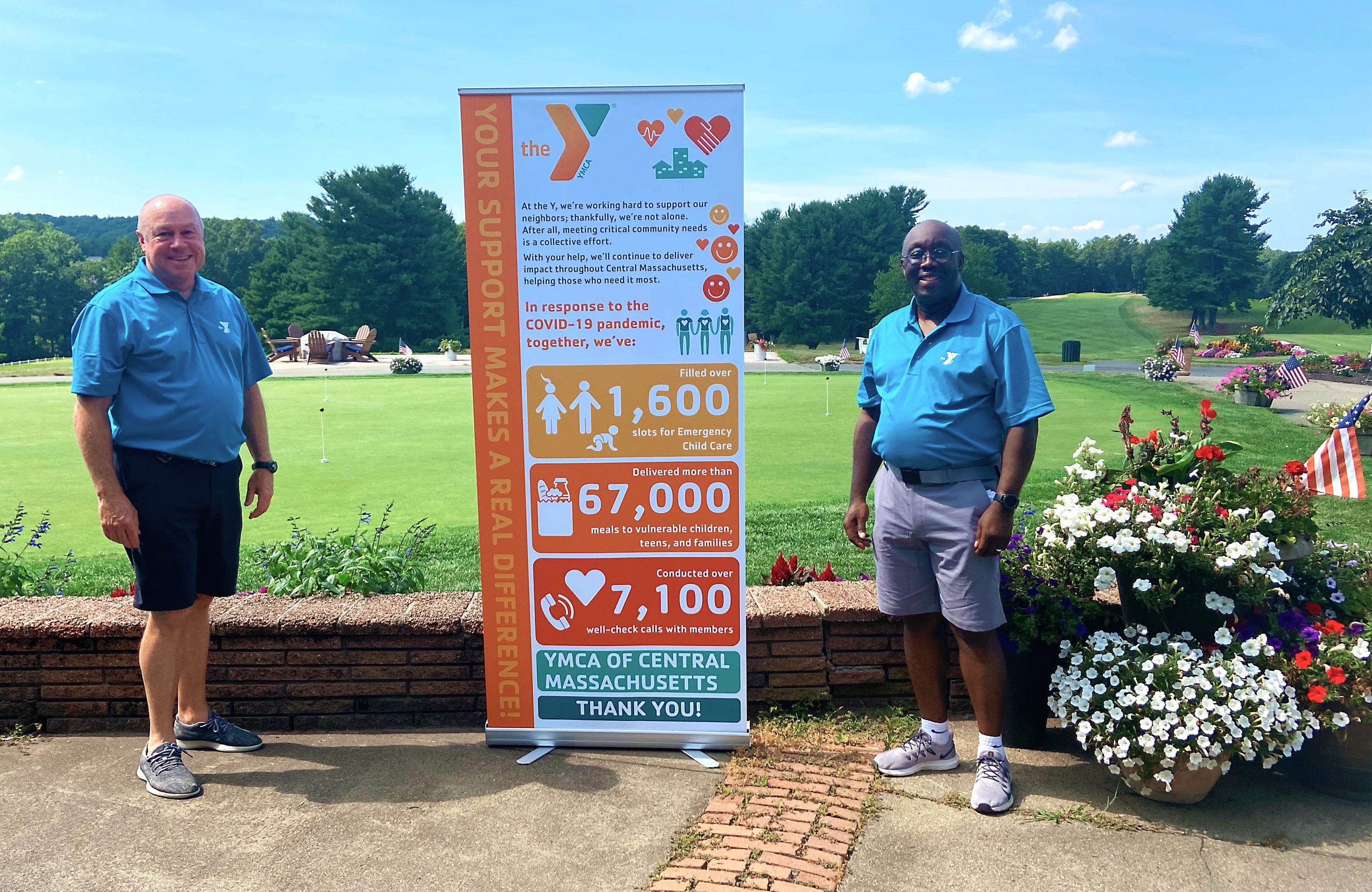
Our 30th Annual YMCA Golf Classic was amazing! We are sure that you will agree that this was a year like no other, and maybe that’s why your participation was so important! We were so glad to see you! After months of ZOOMS and conference calls, we were happy to have the opportunity to thank you in person (of course, safely and socially distant). We had an amazing day on the course and please know how grateful we are for your commitment to the YMCA.

2020 Golf Classic Results

Women’s Division:

1st Place: Team Giant Eagle Vending

Men’s Division:

1st Place: Team NewTek Design Group

2nd Place: Team Atchue

Mixed Division:

1st Place: Team Wells Fargo

Longest Drive:

Women: Suzanne Kozak

Men: Mike Machnowski

Closest to the Pin:

Women: Rosie Naughton

Men: Kevin Bastien

Most Accurate:

Women: Doreen DiPilato

Men: Sean Briere

All raffle prize winners have been contacted! Thank you!

Learn more about our Golf Classic HERE

SHARE:

30th Annual YMCA Golf Classic Read Post »

News Articles

New Music from our Board Member

Did you know that some of our Board Members and staff are also talented musicians? We are excited to have musician, Steve Schuster, on our Board of Directors, as well as vocalist, Sharon Henderson, as our Marketing and Communications Director. Please enjoy reading the full Worcester Magazine article featuring Steve Schuster’s new album, “Unassembled Man”, with backing vocals by Sharon Henderson. (An excerpt is below)

Learn more about Steve Schuster on his website HERE.

Steve Schuster, Board of Directors Member for the YMCA of Central MA, smiles during a presentation at a past YMCA Annual Meeting and Volunteer Appreciation Event.
Sharon Henderson,Director of Marketing and Communications, leads a youth choir during a past YMCA Annual Meeting and Volunteer Appreciation Event.


‘Unassembled Man’ assembled: Steve Schuster gets all Beatlely and personal on new disc.

Article in the Worcester Magazine
By Craig S. Semon
Telegram & Gazette Staff

“…Schuster, who is the YMCA of Central Massachusetts’ board of directors, asked Sharon Henderson, director of marketing and communications at the YMCA of Central Massachusetts, to sing soulful background vocals.”

Read more

SHARE:

New Music from our Board Member Read Post »

News Articles

EEC professionals say coronavirus reveals need

With the coronavirus pandemic shaking up an already-struggling early childhood education and care industry that lacks the infrastructure of the K-12 system, Massachusetts professionals, advocates and lawmakers on Tuesday called for an infusion of public funding and a reimagining of how the state and employers support working families and child care facilities.

In a virtual oversight hearing of the State Legislature’s Joint Committee on Education, speakers painted a picture of anxiety and financial strife among providers and parents alike as the state reopens after a tumultuous few months. Social distancing precautions, concerns over safety, staffing and capacity, and severe levels of COVID-19-related layoffs and furloughs across the state have left many facilities facing insurmountable revenue losses and families with fewer child care options.

“Things are going to look different now,” said Dottie Williams, whose Ms. Dottie’s NeighborSchool in Dorchester serves children between five months and 4 years old. “Ms. Dottie’s going to have a mask on, a shield on. But children are very, very creative when you’re creative with them, and they will adjust.”

Williams told lawmakers she’s asking parents to send children with teddy bears; the kids hug their bears and she hugs hers — creating a bond that helps blunt the “social and emotional impact” of a pandemic that’s seen safety precautions limit physical touch.

Several leaders of nonprofits — many of them shuttered by Gov. Charlie Baker in March aside from those offering emergency services to the children of essential workers and first responders — told lawmakers that an expansion of subsidies through the Department of Early Education and Care would help more families cover tuitions, improve access and keep facilities afloat. Nearly every speaker said child care professionals and advocates should have a seat at the table as policies on early childhood education and child care are formed.

“I’ve heard fear anger, confusion and alienation, but the most important thing I heard was resilience,” Sarah Sian, executive director of the Open Center for Children in Somerville and president-elect of the Massachusetts Association for the Education of Younger Children, testified. “The people working in the classroom and educating the children have incredible wisdom. We need to continue to be heard.”

Sian said the Open Center faces a “devastating financial future” due to coronavirus.

After considering a host of options including layoffs, furloughs, reduced hours and tuition cuts, the two-classroom nonprofit re-opened on June 29 at half capacity and slightly reduced hours, while maintaining all seven full-time teachers, several assistants and other staff. But they’re still on an unsustainable path and expect to lose about $20,000 to $25,000 monthly.

Many child care facilities are reopening with signifiant uncertainty about capacity and needs because “the way things are shifting in the way people are working. We may not know what this is going to look like,” Sian added.

She said a “huge infusion of public relief dollars dedicated to the child care industry” was vital, and “in the long term, the child care industry needs to be reimagined and restructured,” and “available to everyone without undue financial burden.”

Jynai McDonald, the family child care coordinator for the Service Employees International Union 509, said some providers are considering remaining closed due to increased operating expenses and an inability to maintain a steady income amid concerns of exposure or a potential surge in COVID-19 cases.

While many facilities have received grants and funding through coronavirus relief packages approved by Congress and the state, McDonald said the “current business model for family child care providers still needs to be re-examined.”

McDonald called for the state to offer providers $30,000 in annual income to cover basic operating costs. She noted that 90% of family child care providers are women-owned, and more than half are women of color.

“It’s a matter of equity. We have to invest more in early education and recruit and retrain, especially family child care educators,” she said. “Families who work in low-wage jobs are almost always employed in industries where they can’t work remotely. Child care needs to work for families who have to return to work.”

Companies that can offer remote working are seeing 30% to 40% of employees planning to stay home amid the pandemic, according to J.D. Chesloff, executive director of the Massachusetts Business Roundtable.

“You’re going to see competition amongst employees around benefits like you do now, but focused on remote working,” said Chesloff, who also pushed for a public, high-quality early education system.

Claire Higgins, executive director of Community Action Pioneer Valley, said “the pandemic made clear what many have us known for a very long time: schools are child care providers and child care providers are educators.”

Higgins said child care facilities on the whole could not rely on philanthropy or the business community to help them stay in business, arguing that only government can “build permanent systems.”

She urged lawmakers to extend state relief payments to facilities at least through December; to explore waiver opportunities on funding requirements; and to “continue this longer-term exploration into the critical role early childhood plays in the health and welfare of families.”

Rep. Alice Peisch, co-chair of the Education Committee, described the child care industry as “a patchwork of different entities,” with some providers accepting private payments, some subsidized, and some “a little bit of both.”

The pandemic has inspired a “greater realization by a broader sector of the population how critical and important high quality child care is, whether you have a child or not, it has an impact on society’s ability to function,” Peisch said. “We hope that gives us momentum to make changes that we’ve known for some time have to be made.”

School districts in the K-12 public education system have access to state contracts for personal protective equipment, something that may also benefit child care providers, Peisch noted.

Larger organizations like the YMCA, which benefits from strong charitable support, have lost hundreds of thousands of dollars for emergency child care services and cannot meet capacity demands as they navigate varying interpretations of regulators’ COVID-19 guidance.

“There are more children than there are spots,” Pam Suprenant, senior executive director of Youth Development & Central Region for the YMCA of Central Massachusetts, testified Tuesday.

Typically, the YMCA of Central Massachusetts services more than 1,100 children, but “our capacity this summer is less than 500, solely based on square footage per child,” Supernant said in reference to state social distancing and safety guidelines protecting both children and staff.

Statewide, YMCA serves almost half a million children under the age of 18 daily, she said. Throughout the pandemic, YMCA staff have scrambled to maintain communication with families, mental health supports and other services.

“Just because the state shut down does not mean the needs of families stopped,” Supernant said. “Providers like the (YMCA) are the most connected to families and their struggles. We want to be part of the conversation and plans.”

Read the full article on Masslive.com

Read Pam Suprenant’s full EEC testimony


SHARE:

EEC professionals say coronavirus reveals need Read Post »

Scroll to Top